/
Turtle (bottom)
On hands and knees. Defensive, but a common transition point in scrambles.

Your bookmarks
Press Bookmark while a detail you want to rewatch is on screen.
Essentials
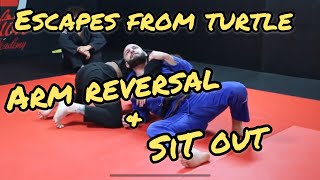
You’re on your knees and elbows, curled up. It stops a pass but exposes your back, so turtle is a short stop: keep your elbows tight, then sit out, roll or recover guard before they settle.
Your goals
- Elbows to knees, hands fighting their grips
- Sit out to face them, or roll (Granby or Peterson)
- Recover guard or come up to standing
What they want
- Insert a hook and take your back
- Choke you (clock choke) or roll you over
Key principles
- Don’t stay in turtle
- Keep your elbows glued to your knees
Common mistakes
- Reaching back to push them
- Staying still while they attack
Techniques to learn
Each one opens its own page and video.




Where it leads
- Other side
- Turtle (top)
- In courses
- Foundations I: Survive & escape
If this happens…
- they slide a hook inHand fight and Granby roll to recover guard
- they grab a seatbeltSit out to the side of their arm and face them
Advanced detailsTransitions, threats, reactions, troubleshooting and a sparring drill
1. Overview
On hands and knees. Defensive, but a common transition point in scrambles.
Key controls
- Elbows tight to knees
- Neck protected
- Work to guard or stand
In this position
5 transitions · 3 threats · 2 reactions · 2 troubleshooting fixes · 1 sparring exercise · 4 techniques
Read about itGrapplearts articlesBJJ Heroes
Finish this lesson
0% of this lesson0/7 videos completed · 0/4 techniques practiced
Test yourselfTurtle (bottom) lesson quiz5 questions · pass with 4